The 60+ Names for Sugar Hidden on Food Labels

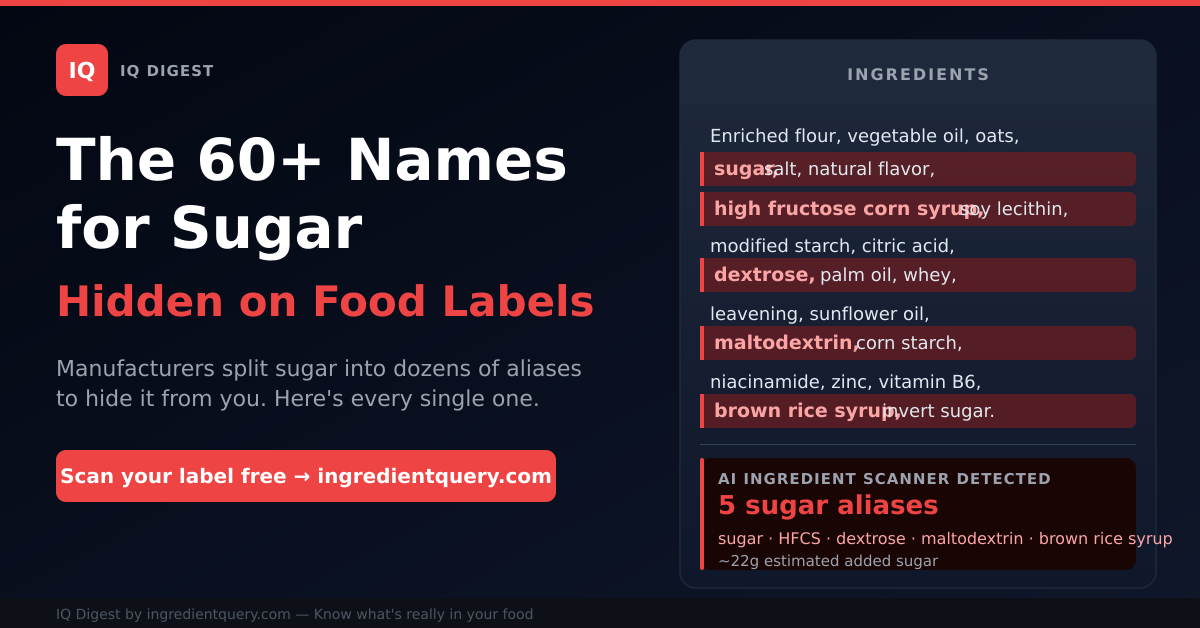
You flip over a box of granola bars and scan the ingredient list. Sugar is fourth from the bottom — that doesn't seem bad. What you don't see is that the first, second, and fifth ingredients are also sugar. They just have different names.
This is called sugar fragmentation — one of the most common tactics food manufacturers use to make a product appear healthier than it is. FDA rules require ingredients to be listed in descending order by weight. By splitting sugar across six different aliases, a manufacturer can push each one further down the list, making none of them appear dominant.
The result: a product that is essentially sugar gets to call itself something else entirely.
Why So Many Names?
Sugar comes from many sources — cane, beets, corn, fruit, rice, tapioca — and each source produces variants that qualify as a distinct ingredient under FDA labeling rules. That regulatory gap is exactly what manufacturers exploit.
There is no requirement to group all sugars together or disclose total added sugar by source. As long as each individual ingredient is listed by its technical name, the label is considered accurate.
The Full List: 60+ Names for Sugar
The obvious ones:
- Sugar
- Brown sugar
- Raw sugar
- Cane sugar
- Powdered sugar
- Confectioner's sugar
- Beet sugar
Syrups:
- High fructose corn syrup (HFCS)
- Corn syrup
- Corn syrup solids
- Rice syrup
- Brown rice syrup
- Malt syrup
- Maple syrup
- Agave syrup / agave nectar
- Golden syrup
- Refiner's syrup
- Sorghum syrup
- Oat syrup
"-ose" sugars (all metabolized as sugar):
- Glucose
- Fructose
- Dextrose
- Sucrose
- Maltose
- Lactose
- Galactose
- Trehalose
"Natural" sugars manufacturers use to sound healthy:
- Honey
- Coconut sugar
- Palm sugar
- Date sugar
- Date syrup
- Fruit juice concentrate
- Apple juice concentrate
- White grape juice concentrate
- Evaporated cane juice
- Monk fruit extract (in some uses)
- Blackstrap molasses
- Molasses
- Turbinado sugar
- Muscovado sugar
- Demerara sugar
- Sucanat
- Panela / Piloncillo
Starches converted to sugar:
- Maltodextrin
- Dextrin
- Modified starch (some forms)
- Corn solids
Less common but real:
- Invert sugar
- Invert syrup
- Caramel
- Carob syrup
- Barley malt
- Barley malt extract
- Ethyl maltol
- D-ribose
How to Spot It on a Label
Rule 1: Count the "-ose" words. Any ingredient ending in "-ose" is a sugar. If you see three of them, the product has at least three separate sugar sources.
Rule 2: Watch for "concentrate." Fruit juice concentrate is essentially liquid sugar with the water removed. It scores no nutritional advantage over cane sugar but sounds like fruit.
Rule 3: Look at positions 1–5. Ingredients are listed by weight. If two or three sugar aliases appear in the top five ingredients, sugar is almost certainly the #1 ingredient by total weight.
Rule 4: Check the added sugars line. Since 2020, the FDA requires "Added Sugars" to be listed on the Nutrition Facts panel in grams. This captures total added sugar regardless of how many aliases are used. Cross-reference this number with the ingredient list — if you see 18g added sugar but only one ingredient sounds like sugar, look harder.
Real Example: A Popular Granola Bar
Here's a real ingredient list (brand withheld):
Rolled oats, sugar, honey, brown rice syrup, vegetable oil, dextrose, crisp rice, molasses, natural flavor, salt.
That's four separate sugar sources in one product. Combined, they likely outweigh every other ingredient — but no single one appears at the top of the list. The label looks reasonable. The reality isn't.
Why It Matters Beyond Calories
The issue isn't just calorie count. Research increasingly distinguishes between different types of sugar and their metabolic effects. High fructose corn syrup, for example, is metabolized differently than glucose — it bypasses the normal satiety signals that tell your brain you're full. Maltodextrin has a glycemic index higher than table sugar.
Knowing there's "18g of added sugar" is useful. Knowing it comes from five fragmented sources signals something more deliberate: a manufacturer actively engineering their label, not just their recipe.
How AI Ingredient Scanner Catches This
When you scan a label with AI Ingredient Scanner, the sugar detection engine checks the full ingredient list against the complete database of sugar aliases — not just the word "sugar." It counts sources, estimates total added sugar load, and flags fragmentation when multiple aliases appear.
A product with four hidden sugar sources gets flagged with a red Hidden Sugars card showing every alias found, an estimated gram count, and a plain-language explanation of what it means.
You don't need to memorize 60 names. Just scan the label.
The Bottom Line
Food manufacturers know most people don't read ingredient lists carefully. They know even fewer people recognize maltodextrin as sugar, or understand that "evaporated cane juice" is just a fancier word for the same thing.
Sugar fragmentation is legal, common, and deliberate. The only defense is knowing what to look for — or using a tool that looks for you.
→ Scan your next food label free at ingredientquery.com